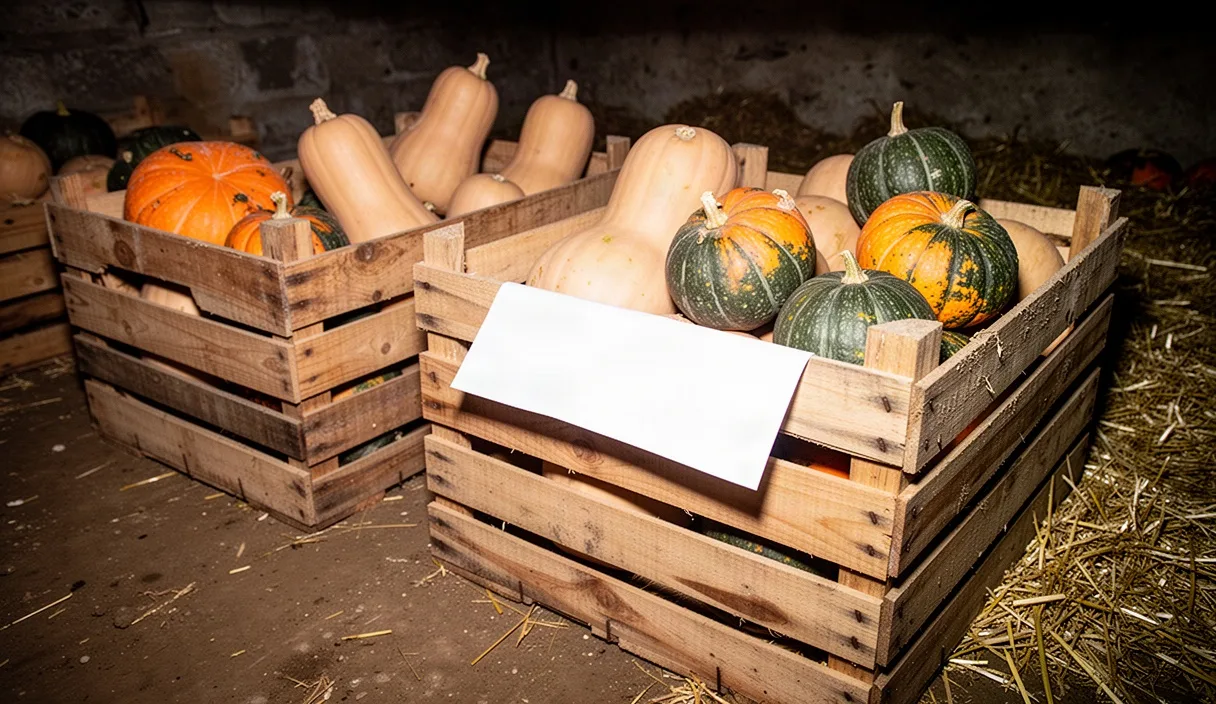
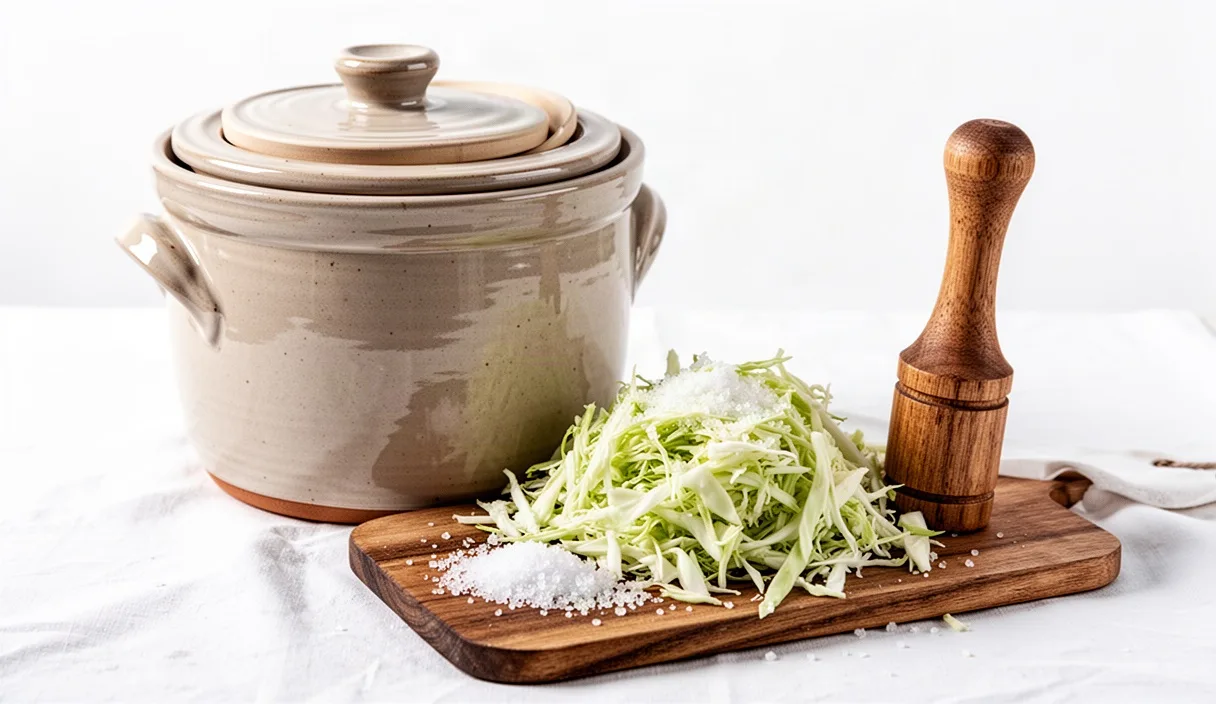
The winter cabbage heads we carry into the kitchen from the cold frame or cellar floor feel dense and stone-cold in our hands. Their outer leaves are often leathery, marked with field dust, and scarred by early frosts, yet beneath those protective layers sits tightly curled, mineral-rich foliage packed with moisture and natural sugars. Fermenting this brassica into crisp kraut requires neither commercial starter cultures nor vinegar additions. It demands only two materials: clean, unchlorinated salt and fresh shredded vegetable tissue, brought together inside the vitrified walls of a stoneware crock.
Working in small-batch stoneware crocks, specifically vessels holding between two and five liters, offers a tactile understanding of lacto-fermentation that glass jars rarely provide. The heavy clay walls insulate the developing brine against abrupt room-temperature swings, while unglazed ceramic weights press the shredded leaves below the waterline by sheer mass. When we commit to salt alone, we allow the wild populations of lactic acid bacteria resident on the plant to dictate the transformation. The process is quiet, steady, and relies entirely on our attention to weights, physical pressure, and ambient cellar temperatures.
Calculating Salt Ratios by Precise Gram Weight
Measuring salt by volume with spoons introduces wide variances because grain geometry changes drastically between fine sea salt, coarse kosher flakes, and mined rock salts. A tablespoon of dense pickling salt can weigh nearly double that of coarse kosher crystals. For predictable fermentation without chemical off-flavors or soft rot, we measure both the trimmed cabbage and the salt strictly by mass using a digital scale calibrated to single grams.
Our target salinity sits between 2.0 percent and 2.5 percent of the total cabbage weight. In warm early-autumn kitchens, we lean toward 2.5 percent to slow down enzymatic softening and restrain spoilage microbes. In cold late-winter sculleries, a ratio of 2.2 percent encourages sluggish lactic bacteria to begin working without delay. Lowering salt below 1.8 percent invites pectolytic enzymes to degrade the cabbage cell walls into mush, while exceeding 3.0 percent inhibits the primary acidifying bacteria entirely, leaving the leaves unpleasantly salty and chemically raw.
| Trimmed Cabbage Weight (g) | Low Target (2.0%) Salt (g) | Standard Target (2.25%) Salt (g) | High Target (2.5%) Salt (g) |
|---|---|---|---|
| 1000 | 20 | 22.5 | 25 |
| 2500 | 50 | 56 | 62.5 |
| 4000 | 80 | 90 | 100 |
| 5000 | 100 | 112.5 | 125 |
We select pure, non-iodized sea salt or pure mined mineral salt devoid of anti-caking agents such as sodium ferrocyanide or calcium silicate. Anti-caking additives cloud the brine and can impart a faint metallic bitterness to the finished kraut, while iodine can interfere with bacterial reproduction. We strip away damaged outer cabbage leaves, quarter the heads, remove the heavy central cores, and record the exact net weight of the edible ribbons on our scale before calculating the salt dosage to the nearest gram.
Tamping and Bruising Leaves to Extract Brine
The extraction of vegetable juice relies on two forces working in tandem: osmotic pressure drawn out by the salt and mechanical rupturing of the leaf cells. Once our cabbage is sliced into fine ribbons, roughly the thickness of a brass coin, we place it in a broad wooden dough trough or food-grade ceramic tub. We scatter the weighed salt evenly over the ribbons, turning the mass with bare hands to ensure every surface carries a light dusting of saline crystals.
We let the salted shreds rest undisturbed for fifteen to twenty minutes. During this rest, salt pulls intercellular moisture toward the surface, causing the leaves to wilt visibly and lose their springy rigidity. Only after this initial weep do we take up a hard-turned wooden tamper, maple or beech works best, to work the shreds. We strike down firmly across the mass, rotating the bowl as we work. The sound changes from a dry rustle to a wet, squelching slap as the cell walls crack open and pool pale green liquid at the bottom of the vessel.
Bruising requires deliberate muscle rather than wild pulverization. If we mash the cabbage into a paste, the kraut loses all structural bite and turns mealy. Our hands remain our finest diagnostic tool: we gather double handfuls of shredded leaf and squeeze hard. When brine flows freely through our knuckles in steady ribbons and the cabbage feels limp yet resilient like soaked leather straps, the extraction is complete. There is no need to add tap water or pre-mixed brine; the cabbage carries all the moisture necessary to submerge itself.
Packing Crocks and Securing Ceramic Weights
We inspect the interior of our small stoneware crock to ensure it is thoroughly cleaned with hot water and fully cooled. Introducing warm cabbage to a warm crock can shock the initial bacterial wave. We transfer the bruised cabbage into the crock three or four handfuls at a time. After each addition, we bring our tamper down with direct downward force, driving trapped air pockets up and out toward the rim. Air pockets are the primary nursery for fungal spores; compacting the ribbons into a seamless, dense block under the rising liquid is critical.
As the crock fills, the brine should rise steadily above the compacted vegetal bed. We leave at least three to four inches of headspace between the top of the liquid and the lip of the crock. This room accounts for the expansion that occurs when carbon dioxide bubbles become trapped in the matrix during early fermentation, lifting the whole mass upward. Before setting our split ceramic stones in place, we lay two or three whole, un-shredded cabbage leaves over the top of the shredded bed, tucking the margins down around the inside rim of the crock like a tailored collar.
- Wipe the crock interior walls above the brine line with a damp, clean linen cloth to remove stray shreds.
- Lower the boiled, cooled semi-circular ceramic weights onto the whole follower leaves.
- Press the stones down until the brine surges over their top faces by at least one inch.
- Ensure no stray ribbons float past the edges of the stones to breach the surface of the brine.
The ceramic weights must be unglazed, fully fired, and heavy enough to counter the buoyant lift of fermentation gas. If our stones do not submerge the vegetable matter completely, we use a boiled field stone of non-porous granite perched atop the split weights to add ballast. The physical law of the crock is simple: everything beneath the liquid line remains in an anaerobic environment; anything breaching the surface risks mold colonization.
Managing the Primary Microbial Ferment Stage
Lacto-fermentation is a relay race among distinct bacterial populations, each preparing the chemical ground for the next. During the first two to four days, the dominant organism is typically Leuconostoc mesenteroides. This gas-producing, heterofermentative bacterium thrives in mild salinity and consumes simple plant sugars, yielding carbon dioxide, ethanol, acetic acid, and lactic acid. This drops the pH rapidly from near-neutral down toward 4.5, effectively suppressing early pathogens and putrefactive bacteria.
During this energetic early phase, we store the crock in a temperate zone between 18 and 21 degrees Celsius (64 to 70 degrees Fahrenheit). If the space drops below 15 degrees Celsius, Leuconostoc mesenteroides slows to a crawl, extending the vulnerable early period where molds can establish themselves. Conversely, if ambient temperatures exceed 24 degrees Celsius, homofermentative bacteria like Lactobacillus plantarum outpace the primary colonizers too early. This skips the complex aromatic stage and produces a harsh, sharp acid profile alongside soft, degraded cabbage tissues.
We maintain the water channel if our crock features a water-lock gutter, checking it daily to refill evaporation losses with clean water. If we use an open-top historical crock, we tie a clean, tightly woven linen cloth around the exterior rim with butcher twine to keep fruit flies and dust motes out while allowing evolving carbon dioxide to escape. Small bubbles should begin rising steadily around the weights by hour forty-eight, indicating the anaerobic metabolic engine has started.
Skimming Kahm Yeast and Tasting for Acidity
Around day six to day ten, a thin, chalky, white film may appear across the brine surface. This is typically Kahm yeast, an aerobic pellicle formed by wild surface yeasts when oxygen contacts the liquid. Kahm yeast is not mold; it does not produce fuzzy green, black, or blue patches, nor does it generate roots that penetrate deep into the brine. However, if left unchecked, Kahm yeast will metabolize lactic acid, raising the pH of our crock and introducing an unpleasant stale, cheesy aroma to the brine.
We address surface growths through systematic skimming rather than panic:
- Remove the crock cover and inspect the brine surface under direct natural light.
- Take a clean stainless steel spoon or skimmer and sweep gently from the center outward, lifting the thin white veil off the surface.
- Rinse the spoon between every pass to avoid redistributing yeast fragments across the liquid.
- Wipe the exposed interior clay walls of the crock with clean parchment dipped in food-grade vinegar to eliminate dried surface remnants.
Tasting starts on day twelve and repeats every four to five days. We slip a clean wooden or bamboo skewer past the ceramic weight, pull up a small cluster of shreds, and chew thoughtfully. We evaluate the bite first: it should crunch crisply between our molars without chalkiness or gelatinous give. Next, we read the acid progression. In week two, the kraut will taste pleasantly tart, like green apples, signaling that Lactobacillus plantarum and Lactobacillus brevis have taken over the fermentation. By week three or four, the acid deepens into a round, persistent sourness with complex fermented funk, while the sharp raw cabbage bite disappears entirely.
Transitioning from Crock to Cold Cellar Jars
Once the cabbage achieves the balanced, complex acidity we desire, we halt active room-temperature fermentation. Leaving the finished kraut in an ambient-temperature crock indefinitely increases the risk of brine evaporation, yeast blooms, and over-souring. We prepare sterilized wide-mouth glass canning jars, rubber gaskets, and clean lids to receive the kraut for long-term cold preservation.
We lift the ceramic weights and discard the top follower leaves, which have performed their shielding duty and may have grown soft or collected yeast sediment. Using clean tongs or washed hands, we transfer the kraut from the crock into the glass jars, packing the ribbons down tightly to expel residual pockets of gas. We ladle the clean, active brine from the crock over the packed cabbage, ensuring the leaves remain drowned under at least half an inch of liquid in each jar.
We seal the jars loosely with two-piece metal lids or clip-top rubber seals. For the first two weeks in cold storage, dormant bacteria will continue to emit minor amounts of gas, which must escape to avoid dangerous pressure accumulation. Store the jars in a dark cold cellar, root cellar, or refrigerator maintained between 1 and 4 degrees Celsius (34 to 40 degrees Fahrenheit). Under these cold conditions, enzymatic degradation stops almost entirely, allowing the kraut to maintain its crisp, bright integrity for eight to twelve months.
Common Mistakes
The most pervasive error in small-crock fermenting is adding water to make up for a perceived shortage of brine. Adding unmeasured water dilutes the calculated salinity, drops the acid concentration, and softens the cabbage ribbons. If fresh cabbage fails to yield enough juice after vigorous tamping, it is almost always old, moisture-depleted stock from mechanical cold storage. If supplemental brine becomes unavoidable, dissolve pure salt into non-chlorinated water at an exact 2.5 percent concentration before pouring it over the stones.
Another regular failure stems from using porous weights or unboiled garden stones. Porous ceramic that has absorbed fats, molds, or old brine from past years will inoculate the fresh vegetable bed with unwanted wild strains. Always boil weights in plain water for twenty minutes before seating them in the crock. Finally, resist the urge to place the fermenting crock near heating vents or sunlit windowsills; heat spikes will degrade cabbage texture faster than any other single variable.
Next Steps in Your Pantry
To begin this project, locate dense, heavy winter storage cabbages from a local grower, preferably heads harvested after the first autumn frost when natural sugar contents are highest. Set up a simple workspace with your digital kitchen scale, a solid cutting board, a sharp chef knife or mandoline, and your chosen earthenware crock. Write down the tare weight of your vessel and the exact mass of your raw cabbage shreds in a dedicated kitchen logbook.
Once you observe the rhythm of wild lactic fermentation with cabbage and salt alone, this reliable technique can expand to include small additions of caraway seed, sliced juniper berries, grated winter radishes, or thin rounds of root carrots. Keep close watch on your brine levels, trust the clean salt measurements, and let the quiet, microbial biology of the cellar preserve your garden harvest through the long cold months ahead.