In our workshop kitchens, grease is an honest mark of daily use, but baked oil has a way of turning stubborn over weeks of roasting and frying. When rendered tallow, butter fats, or cold-pressed vegetable oils are repeatedly exposed to high pan temperatures, they cross-link into a tough, amber-colored resin. These polymer sheets bind directly to the microscopic valleys of cold-rolled stainless steel and cast iron, resisting ordinary soap and light scrubbing. Rather than reaching for chlorinated solvents or synthetic stripping agents that leave harsh fumes on our seasoned surfaces, we return to the elemental combination of sodium-based alkaline powders and sustained moist heat.
Working with basic alkaline salts requires an understanding of how metal surfaces and organic lipids interact. Sodium carbonate, often called washing soda, and its milder sibling sodium bicarbonate, or baking soda, possess the chemical nature required to break apart polymerized oil films without abrading the base metal. By managing water temperature, slurry thickness, and dwell time, we can soften these charred coatings so they lift away under a horsehair brush or copper cloth. It is a slow, tactile craft that preserves the integrity of our cookware while keeping our wash basins free from synthetic compounds.
The Chemistry of Alkaline Saponification on Cookware
The transformation that occurs when hot washing soda contacts baked oil is identical to the fundamental chemistry of cold-process soapmaking. Triglycerides and free fatty acids in the pan are composed of glycerol heads bound to long hydrocarbon tails. When we introduce a basic salt with a high pH in the presence of water, the hydroxide ions attack the ester linkages of the grease molecules. This process, known as alkaline saponification, cleaves the fat into water-soluble glycerol and fatty acid salts, which we recognize functionally as crude soap.
Sodium bicarbonate provides a gentle alkalinity, resting at roughly pH 8.3 in aqueous solution. It works well for light pan degreasing and surface maintenance because its crystalline structure provides a mild physical scouring action before it fully dissolves. Sodium carbonate is significantly more alkaline, registering near pH 11.2 in a ten percent water solution. This higher alkalinity yields far more active hydroxide ions, allowing it to hydrolyze heavily oxidized, polymerized oil films that sodium bicarbonate cannot touch alone. The higher the alkalinity, however, the more cautious we must be with our hands and non-ferrous metals.
| Compound | Typical Slurry pH | Crystalline Hardness | Primary Functional Action |
|---|---|---|---|
| Sodium Bicarbonate | 8.2 to 8.5 | 2.5 Mohs | Mechanical friction and gentle ester hydrolysis |
| Sodium Carbonate | 11.0 to 11.4 | 3.0 Mohs | Aggressive saponification and dissolution of cross-linked oils |
| Sodium Percarbonate | 10.5 to 11.0 | Variable | Alkaline cleaning coupled with active oxygen lifting |
Heat accelerates this conversion exponentially. For every increase of ten degrees Celsius, the rate of the saponification reaction roughly doubles. Cold washing soda water works sluggishly, requiring hours of soaking that can cause pitting along micro-crevices in lower-grade steels. By introducing water at 80 to 95 degrees Celsius, we fluidize the heavier grease fractions and provide the thermal energy required for the alkaline ions to pierce the lacquer-like crust.
Mixing Concentrated Paste for Baked Surfaces
When grease crawls up the exterior sidewalls or cooks onto the bottom rivets of a skillet, liquid solutions run off before the chemistry can do its work. For these vertical and inverted planes, we mix a dense, clinging paste. We begin with dry washing soda in an earthenware bowl, measuring three parts powder by volume to roughly one part water freshly drawn from a boiled kettle. Pour the water gradually, stirring with a wooden paddle or stiff flat brush until the crystals hydrate into a glossy, heavy mortar resembling plaster.
The mixture will warm slightly in the bowl as the anhydrous powder hydrates. If the paste is too thin, it will slip off vertical metal lips; if it is too dry, the crystals will rob moisture from the reaction and turn chalky before loosening the resin. The paste should hold a ridge when carved with a knife edge. For particularly thick, black carbon deposits on pan bottoms, blending equal parts washing soda and fine-milled sodium bicarbonate creates a paste that combines the high pH of the carbonate with the persistent, pasty body of the bicarbonate.
- Measure 120 milliliters of sodium carbonate into a broad ceramic vessel.
- Add 35 to 45 milliliters of hot water at 90 degrees Celsius in small splashes.
- Work the mass with a spatula until all gritty pockets are evenly wet and creamy.
- Trowel the paste onto the cooled skillet, keeping the layer roughly three millimeters thick over all burnt surfaces.
We handle this paste using unlined natural rubber gloves. Because of its high alkalinity, washing soda will saponify the natural protective sebum on our fingertips within moments, leaving skin slippery and prone to deep cracking. Apply the paste methodically, pressing it into the junction where cast handles are riveted to the pan body, as these joints are notorious for trapping charred lard.
Protecting Aluminum and Bare Brass from Chemical Etching
Before applying an alkaline wash across any piece of cookware, we examine the construction of the vessel. Metals respond dissimilarly to high pH environments. Ferrous metals, such as stainless steel and raw carbon steel, tolerate alkaline environments exceptionally well. Pure aluminum, cast aluminum alloys, and copper-zinc brass alloys do not. Aluminum is an amphoteric metal, meaning it reacts vigorously with both strong acids and strong bases.
When washing soda contacts bare aluminum, the hydroxide ions dissolve the protective aluminum oxide passivating layer, exposing bare metal to rapid oxidation. The surface will darken to an ashen grey or charcoal tone within twenty minutes, and prolonged contact causes micro-pitting that permanently weakens the vessel. If your pan features an encapsulated aluminum core exposed along the trimmed rim, or if you are cleaning an antique cast aluminum Dutch oven, washing soda should be put aside in favor of neutral dish soaps and soft wood scrapers.
| Substrate Material | Alkaline Compatibility | Recommended Contact Time | Visible Risk of Misuse |
|---|---|---|---|
| 304/316 Stainless Steel | Excellent | Up to 12 hours | Minimal; occasional light mineral film |
| Enameled Cast Iron | Good | 1 to 3 hours | Loss of surface gloss if allowed to dry completely |
| Cast or Spun Aluminum | Unsuitable | Zero minutes | Rapid blackening, chemical etching, surface pitting |
| Bare Brass Accents | Poor | Under 5 minutes | Dull tarnish, pinkish copper de-alloying |
Brass handles, often found on classic French splayed sauté pans, require a protective wax coat if the steel surrounding them must be treated. We apply a thin film of petroleum jelly or beeswax to brass brackets and rivets before laying down alkaline pastes. If the paste accidentally touches the brass, flush it immediately with cold running water and a splash of distilled white vinegar to neutralize the base before the zinc can leach out from the alloy.
Applying Wet Heat with Damp Cloth Compresses
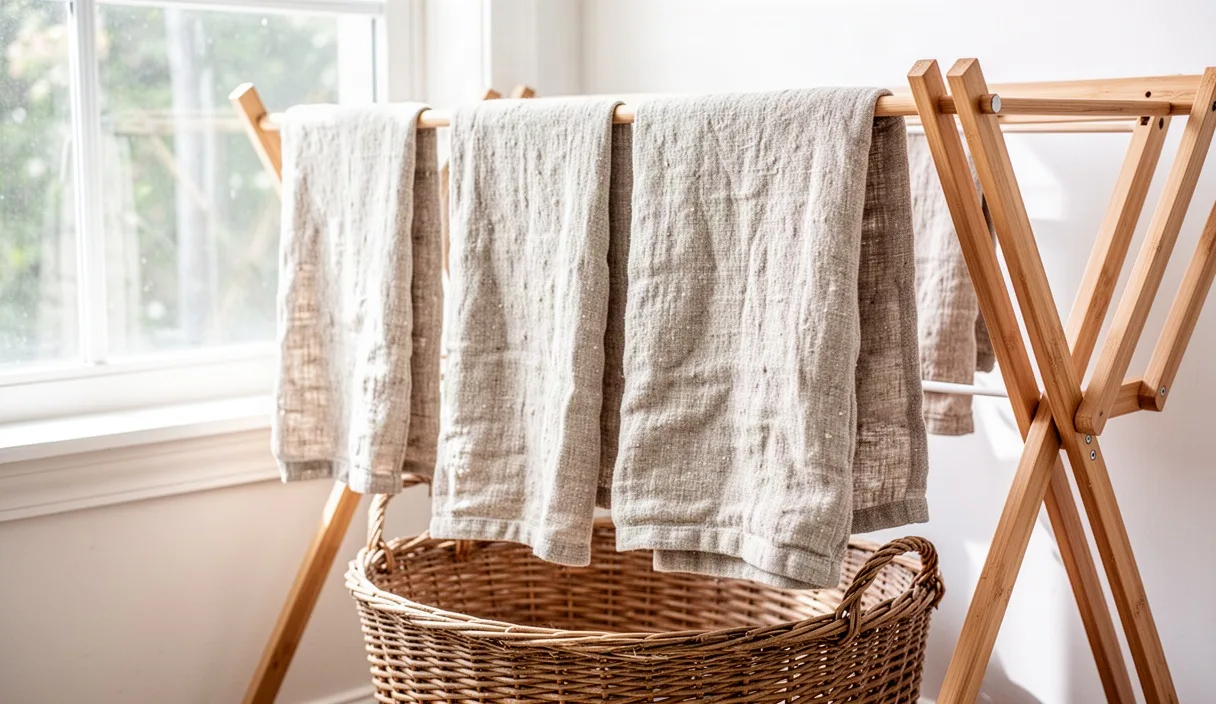
An alkaline paste fails if it dries out. Once water evaporates from the slurry, ion mobility drops to zero, and the chemical action halts completely. To maintain the heat and humidity necessary for saponification across vertical skillet walls, we employ cloth compresses made from dense cotton linen or unbleached flannel.
After troweling the soda paste over the charred resin, saturate strips of heavy cotton fabric in water heated to roughly 85 degrees Celsius. Wring them just until they stop dripping, then lay them directly against the paste-covered metal, overlapping the edges by two or three centimeters. The damp cloth holds the moisture against the skillet and traps the latent heat. For heavy, three-layer deposits, wrap the entire wrapped pan loosely in an unsealed silicone sheet or wax paper to arrest ambient evaporation over several hours.
- Lay down the three-millimeter layer of soda paste across the target grease patches.
- Immerse heavy linen strips into hot water drawn straight from a tea kettle.
- Press the steaming fabric smoothly against the paste, smoothing out air bubbles with gloved hands.
- Allow the compress to dwell for 45 minutes on medium grease, or up to 90 minutes for cross-linked poly-grease.
- Check the state of the reaction by lifting one corner of the cloth and nudging the paste with a square wooden peg.
Under the compress, the stubborn brown varnish gradually softens into a sludge the color of dark tea. If the compress begins to cool and turn dry before the resin softens, mist the linen surface with boiling water from a hand sprayer. Never let the paste bake onto the surface under dry room air, as removing dried sodium carbonate scale requires an extra round of acid washing.
Rinsing Mineral Haze to Leave Clean Steel
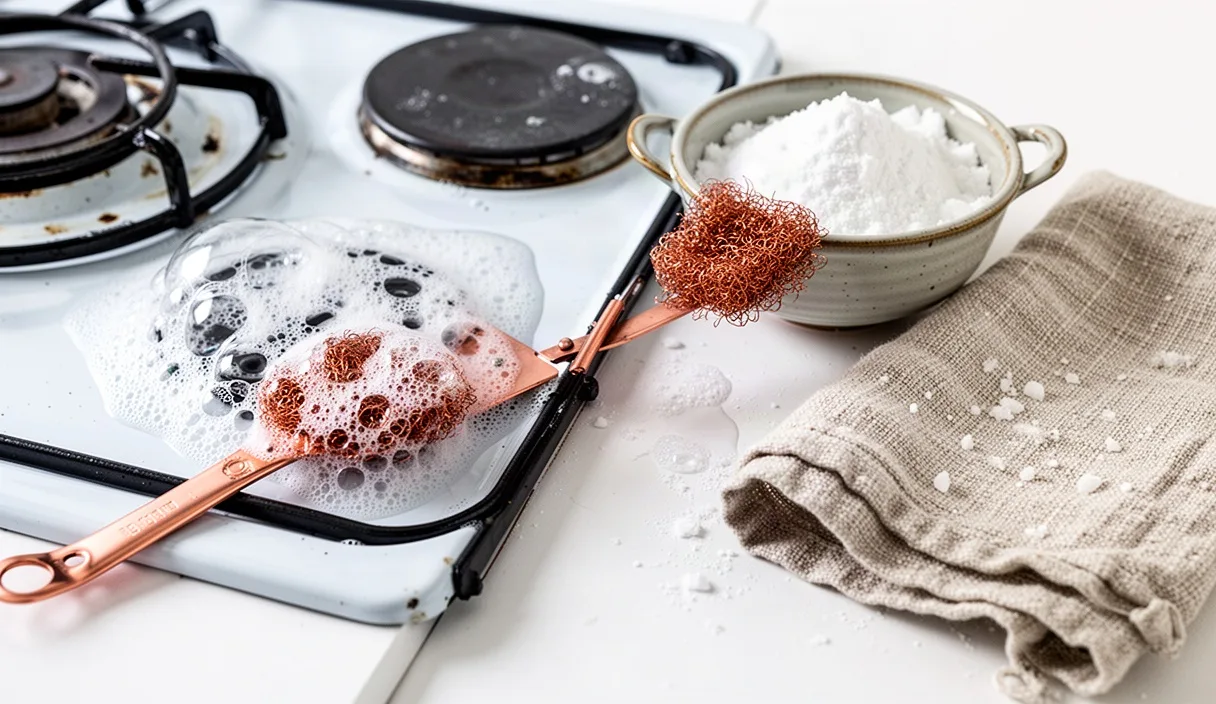
Once the grease has saponified into a soft gel, strip away the linen compresses and rinse the piece with warm tap water. Scrub in tight, circular motions using a stiff tampico fiber brush or a woven copper pad. The softened fats will emulsify into a milky run-off that washes cleanly down the drain. You will feel the texture of the metal change under your fingertips, moving from greasy drag to the crisp, drag-free sensation of bare alloy.
After the black crust washes away, you may notice a chalky, cloud-like white haze clinging to the steel. This is not leftover fat; it is insoluble sodium carbonate precipitate and calcium carbonate dragged out of hard rinse water by the high alkalinity. Scrubbing this mineral haze with more soap will merely spread it around. To clear it, we neutralize the alkaline residue with a weak, food-grade organic acid wash.
We blend sixty milliliters of raw, distilled five percent white vinegar or fifteen grams of citric acid powder into half a liter of warm water. Wipe this solution across the metal with a soft sponge. The acid reacts instantly with the basic mineral film, producing light effervescence as it converts the carbonates into soluble acetates or citrates. Rinse the steel a final time under boiling tap water to wash away the neutral salts, then dry the cookware immediately with a tight-woven linen tea towel to keep ambient evaporation from forming water rings.
Common Mistakes
- Allowing alkaline paste to dry fully on enameled iron: When sodium carbonate dries against vitreous enamel glazes, the shrinking salt crystals can cause microscopic surface checks, robbing the glossy finish of its smooth sheen.
- Using metal scrapers on hot paste: Scraping softened grease with sharp carbon putty knives often gouges the heated, softened metal beneath. Use end-grain hardwood spatulas or brass wool instead.
- Neglecting handle seams: Slurries allowed to wick into hollow handles or behind spot-welded plates can slowly weep dried white salts for weeks if not flushed out with pressurized hot water and an acid rinse.
- Treating seasoned cast iron: Saponification does not distinguish between unwanted baked grease and your hard-earned culinary seasoning. Applying this method to seasoned skillets will strip the black oil patina back to raw grey iron.
Practical Next Steps
To restore your cookware systematically, set aside an afternoon and prepare your materials on an uncluttered wooden workbench or deep utility sink. Assemble your raw supplies: an airtight crock of fresh sodium carbonate, a supply of clean cotton rags torn into ribbons, natural rubber gloves, a stiff natural-bristle brush, and a bottle of standard five percent distilled vinegar. Inspect the base stamps on your pans to verify whether the metal bodies are magnetic stainless steel, raw carbon steel, or an unlined aluminum alloy.
Begin with a single test vessel bearing modest sidewall grease. Mix a small batch of warm paste, apply your damp cloth compress, and time the dwell for 45 minutes to observe how quickly your kitchen fat yields to the alkaline break. Once you have rinsed and cleared the chalky mineral haze with your vinegar bath, run your bare hand across the cooled metal. The surface should feel uniformly cool, satin-smooth, and entirely free of oil drag. Store your remaining dry soda in a sealed glass jar, as it will eagerly pull moisture and carbon dioxide out of ambient air if left open to the pantry.